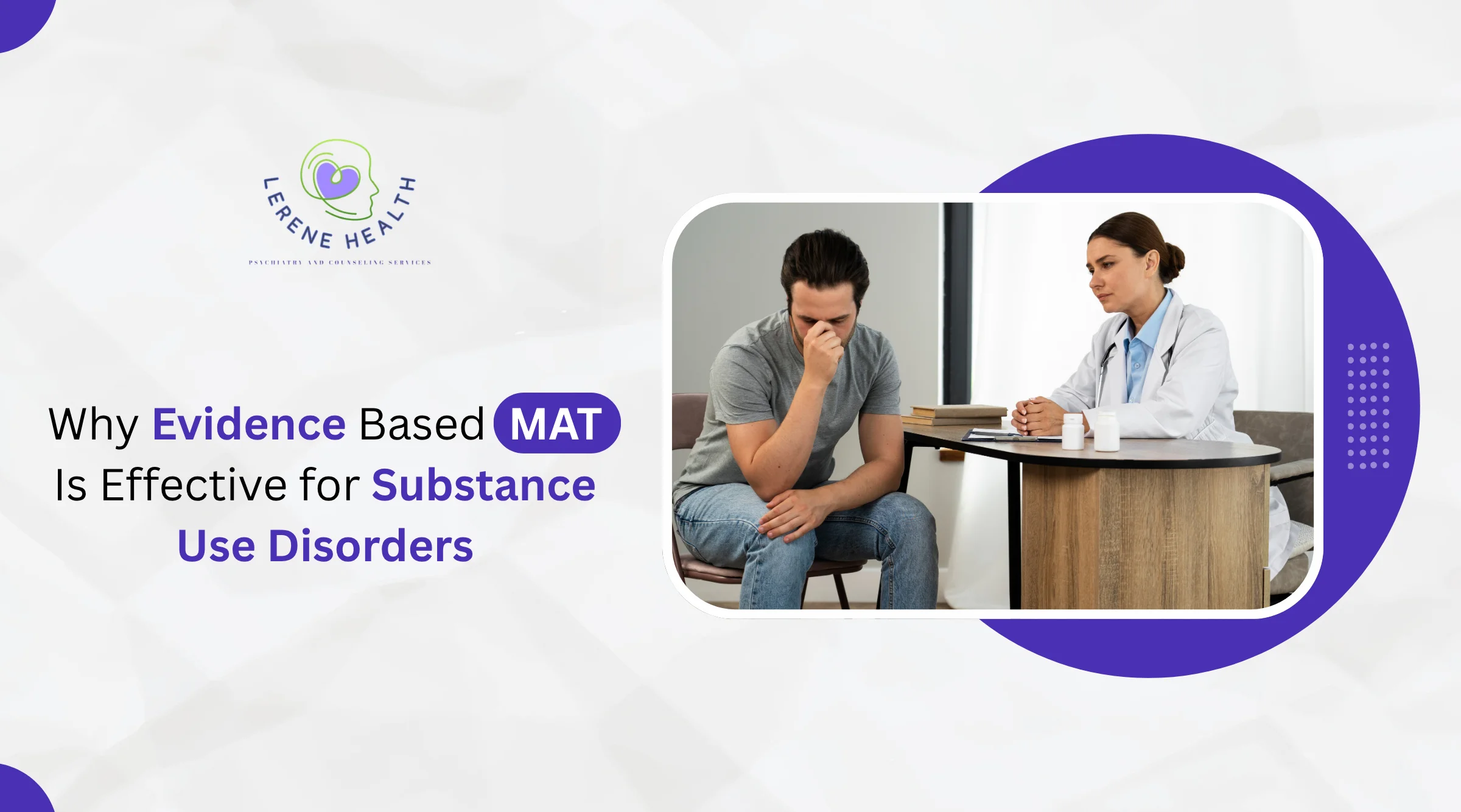
Evidence-based MAT uses FDA-approved medication and counseling and support to treat SUDs. Some medications have been shown to reduce the risk of overdose death, reduce craving and increase the rate of successful treatment adherence. It’s not a quick fix or a “trading one drug for another.” It’s healthcare for a medical issue.
It may be difficult to say out loud, so let’s begin with that. You or someone you love is struggling with substance use and you are not alone and are not weak.
Addiction is a disease. Alters brain function with regards to cravings, stress, and reward. It can’t be turned off with willpower.
Medications are used to help these patients manage the symptoms of their addiction.
That’s where medication-assisted treatment comes in. You’ll also hear it called medication for addiction treatment, or MAT. It’s one of the best-studied ways to treat certain substance use disorders. And it’s still misunderstood.
So let’s clear it up.
What Is MAT?
MAT means using medication, along with counseling and other support, to treat a substance use disorder.
It’s not just “taking a pill.” A full plan usually includes:
- A medical evaluation
- The right medication, if it fits
- Counseling or therapy
- Regular follow-up
- Support for other health needs, like depression or anxiety
The medication helps steady the body and calm cravings. The counseling helps with habits, triggers, and life stuff. Together, they work on both sides of the problem.
Which Conditions Does It Treat?
MAT is mostly used for:
- Opioid use disorder, which includes addiction to heroin, fentanyl, and prescription painkillers
- Alcohol use disorder
Different medications are used for each. Your provider decides what fits your situation, health history, and goals.
What Medications Are Used?
Here’s a general overview. Only a medical provider can say what’s right for you.
For opioid use disorder:
- Eases cravings and withdrawal.
- Also eases cravings and withdrawal. It’s typically given through specially certified programs.
- Blocks the effects of opioids. It’s not a substitute drug.
For alcohol use disorder:
- Naltrexone
- Acamprosate
- Disulfiram
Each works differently, and each has pros and cons. That’s why an evaluation comes first.
What Does the Research Say?
Here’s where it gets interesting.
A well-known study led by Dr. Marc Larochelle at Boston University School of Medicine looked at more than 17,000 adults in Massachusetts who had a nonfatal opioid overdose between 2012 and 2014. It was published in Annals of Internal Medicine in 2018, with NIH support.
Here’s what they found over the next year:
- People who got methadone were 59% less likely to die of an opioid overdose than people who got no medication
- People who got buprenorphine were 38% less likely to die of an opioid overdose
- Naltrexone wasn’t linked to a difference in deaths. The researchers noted that may be because so few people got it.
(Source: NIH Research Matters, Medications reduce risk of death after opioid overdose)
Now, a few honest caveats. This was an observational study. That means it shows a strong link, not proof that the medication alone caused the drop. It also used data from one state, from 2012 to 2014. So it’s one piece of the picture.
But here’s the part that stuck out. Fewer than a third of those people received any of these medications after their overdose. Methadone reached about 11%, buprenorphine about 17%, and naltrexone about 6%. And the median time on treatment was under six months.
So the issue isn’t that the treatment fails. For many people, it’s that they never get it, or they don’t get it for long enough.
Why Does MAT Work?
It comes down to a few things.
It Steadies the Body
Withdrawal and cravings can be brutal. Medication can reduce both, so people can think clearly and take part in recovery instead of just trying to survive the day.
It Lowers the Risk of Overdose
As the study above shows, certain medications are linked to lower death rates after an overdose. That alone makes it worth taking seriously.
It Keeps People in Treatment
Recovery takes time. When cravings and withdrawal are managed, it’s easier to keep showing up for appointments and therapy.
It Works With Counseling, Not Instead of It
Medicine helps with the biology. Counseling helps with the rest: triggers, stress, relationships, habits, and old thought patterns.
It Treats the Whole Person
Many people with substance use disorders also deal with depression, anxiety, trauma, or ADHD. Treating those too can make recovery more stable.
“Isn’t MAT Just Swapping One Drug for Another?”
This is the most common myth. Let’s talk about it.
Here’s the honest answer. No, it’s not the same thing.
- Medications used in MAT are prescribed, dosed, and monitored by a medical team
- They’re meant to reduce cravings and withdrawal, not to produce a high when taken as directed
- The goal is stability, so a person can get back to work, family, and life
Think about insulin for diabetes or blood pressure medication for hypertension. Nobody says those people are “swapping one drug for another.” They’re treating a health condition.
Same idea here.
What Else Gets in the Way?
Even when MAT works, people run into walls.
- Fear of being judged by family, work, or even other recovery groups.
- Not enough providers, long waits, or travel.
- Cost and insurance questions.
- Like the myth above.
- Short treatment time. Stopping too early, as the study suggests many people do.
None of these mean you can’t recover. They just mean it helps to have a team that knows how to navigate them.
What Does MAT Look Like in Real Life?
Every program is different. But here’s a rough picture.
- First visit. A provider talks with you about your history, substance use, mental health, and goals.
- Medical check. They look at your health, other medications, and risks.
- Plan. You and your provider decide on a medication, if it fits, and a counseling plan.
- Follow-up. You check in regularly so your provider can adjust your plan.
- Ongoing support. Therapy, support groups, and help with life challenges.
- Long-term care. Some people stay on medication for months or years. Others taper off, with medical guidance.
Don’t stop or change medication on your own. If you want to come off it, talk to your provider about a safe plan.
How Long Should Someone Stay on MAT?
There’s no one answer. It depends on the person, the substance, and how recovery is going. Some people need it short term. Others do better for longer.
The research above suggests many people stop earlier than may be ideal. So if you’re feeling better and thinking about stopping, bring it up with your provider first.
What If Someone Relapses?
It happens, and it doesn’t mean failure. Substance use disorders are chronic conditions, and setbacks are common.
What matters is getting back to care quickly. Tell your provider. Don’t hide it.
And one safety note. Tolerance can drop after a break from opioids, which raises overdose risk. If you or someone around you uses opioids, ask your provider about naloxone, the medication that can reverse an overdose.
When Should You Reach Out?
Consider getting help if:
- You can’t cut back, even though you want to
- You’re using more than you meant to
- Your use is affecting work, family, or health
- You’re hiding it from people
- You’ve had withdrawal symptoms
- You’ve overdosed, or come close
- You feel hopeless
If you’re in crisis, or thinking about harming yourself, call or text 988. In an emergency or suspected overdose, call 911.
How Can Lerene Health Help?
At Lerene Health, we offer psychiatric evaluation, medication management, and individual counseling for adults, along with MAT for alcohol and substance use disorders. We also offer telehealth.
Our approach is individualized and evidence-based, with care that looks at the whole person. Not just the substance use, but the mood, stress, and life around it. See our services or read about us.
Want to know how medication and therapy fit together? Read our post on integrating medication and therapy.
Quick Answers
Does MAT really work?
Research links certain medications to lower overdose deaths and better treatment outcomes. One large study found methadone and buprenorphine were tied to fewer opioid overdose deaths.
Is MAT only for opioids?
No. There are also medications for alcohol use disorder.
Is MAT replacing one addiction with another?
No. The medication is prescribed and monitored to treat a medical condition, and the goal is stability.
Do I need therapy too?
Counseling is usually part of a full plan. It helps with the parts medication can’t.
How long does MAT last?
It varies. Talk to your provider before making any changes.
Can I do MAT through telehealth?
Some care can be delivered by telehealth, depending on the medication and the rules that apply. Ask your provider what’s possible.
What if I’ve tried to quit before and failed?
That’s very common, and it doesn’t mean you can’t recover. Many people need more than one attempt.
Take the Next Step
You don’t have to go through this alone. If you or someone you love is ready to talk, we’re here.
- Book an appointment
- Contact us
- Call 856-208-5798 (Monday to Friday, 7:30 AM to 6:30 PM ET)
- Learn more on our FAQs
- Read more on our blog
This article is for general information only and isn’t medical advice. It can’t diagnose or treat any condition.
Source: NIH Research Matters, Medications reduce risk of death after opioid overdose