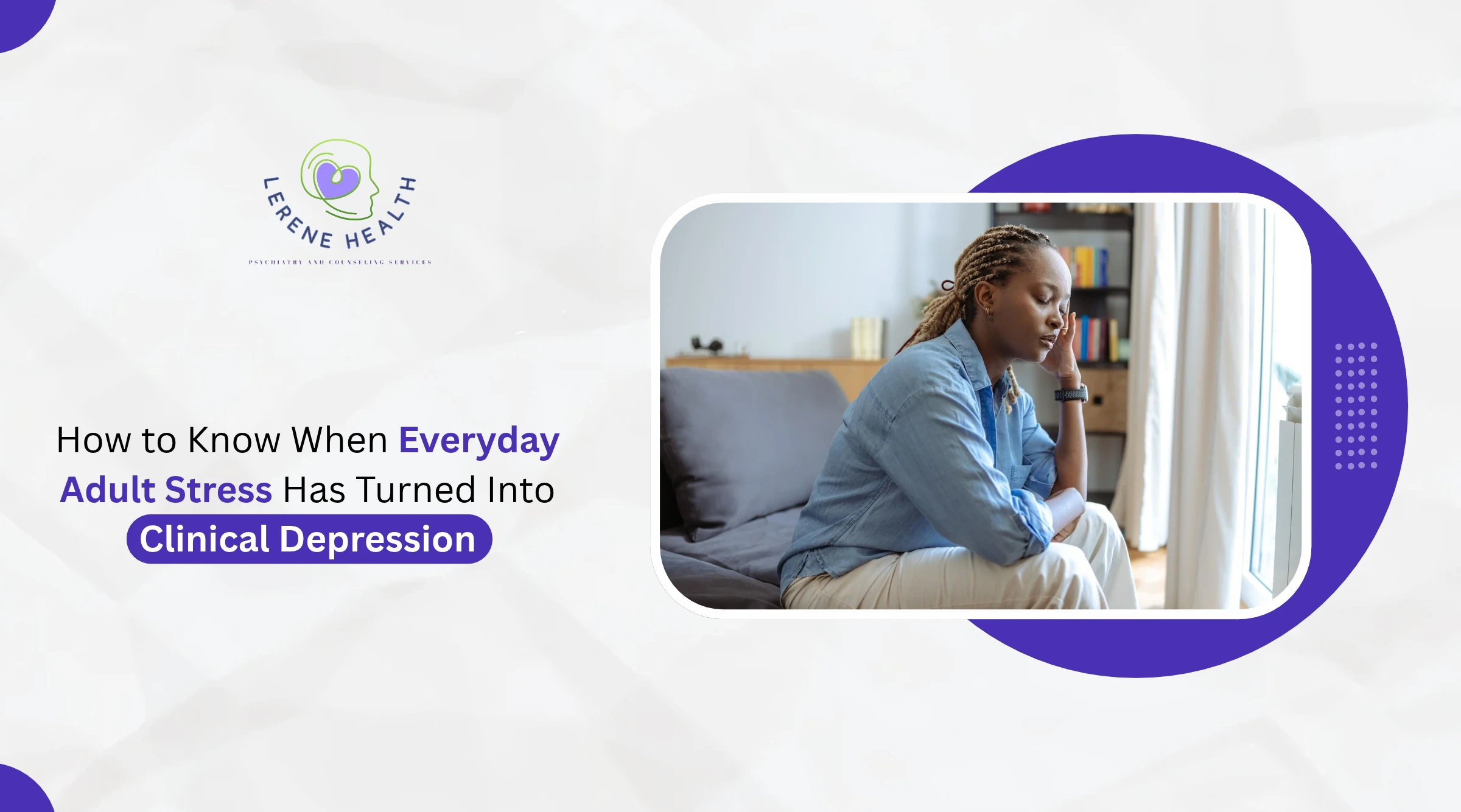
The daily pressures we face usually subside when the pressures do. This is not the case with clinical depression.
When you have experienced feelings of sadness, emptiness, loss of interest in activities that were once pleasurable, for almost all of the time, on a regular basis, for at least two weeks – and these feelings are interfering with your ability to function properly (i.e., sleep, work, relationships) – you should contact someone.
But that’s the short answer. In reality, though, life is seldom structured like a simple list of things to do, so I will give you a more complete view of how things work.
What Is the Difference Between Normal Stress and Depression?
Stress is a reaction to pressure. Usually you can identify the source of the pressure – such as a deadline, financial difficulty, or family issue. Once the source of the pressure has lessened, your stress levels should also decrease.
Depression is different. At some point it ceased to be based on an event.
You could be done with the assignment, receive positive feedback, or finally have time off from work/school and yet you were still in a slump; you felt heavy, flat, or even numbed.
Your “cloud” didn’t clear away as soon as the weather changed.
The strongest indicator is what happens when you have positive experiences. When you’re stressed, a great night out with friends or a sweet text from someone can help alleviate the stress.
However, with depression, these positive experiences do not seem to have the same effect.
This loss of enjoyment in life has a clinical term called anhedonia. This is one of the first things a clinician will inquire about.
| Everyday Stress | Clinical Depression | |
| Cause | Tied to a clear trigger | Continues even without one |
| Duration | Comes and goes | Most of the day, nearly every day, 2+ weeks |
| Good news | Still brings relief | Feels muted or meaningless |
| Energy | Tired but recovers with rest | Exhaustion sleep doesn’t fix |
| Daily function | Mostly intact | Work, home, or relationships slipping |
No single row decides it. It’s the overall pattern that matters.
How Does Stress Turn Into Depression?
Short-term stress is good for you. When you experience a short-term stressful situation, your body will release the hormone cortisol. Cortisol helps you focus better on what is going on around you. It allows you to deal with difficult situations.
The first issue occurs when that system does not receive a rest period. If stress is continuous for many weeks or even months, with no true recovery:
- Stress hormones stay elevated, disrupting sleep, appetite, and mood regulation
- Your reward system quiets down, so things that once felt good stop feeling good
- Recovery habits slip – less sleep, less movement, less connection with people
- Your thinking narrows, and hope becomes harder to reach
The previous point made the next point even worse. This is why many people describe their experience of depression as a gradual decrease in mood rather than a rapid decrease in mood.
There is no weakness. Your brain was functioning at “emergency levels” for too long.
What Are the Warning Signs That Stress Has Become Depression?
Depression can show itself in four different ways. Most individuals see changes in more than one area.
Emotional Signs
- Feeling sad, empty, or “nothing” most of the day
- Losing interest in hobbies, food, sex, or people you care about
- Irritability or a short fuse over small things
- Hopelessness, excessive guilt, or a sense of worthlessness
It’s worth noting that many adults – especially men – experience their depression as anger and/or frustration, rather than feeling sad. If you haven’t been acting like yourself lately, pay attention to it.
Physical Signs
- Trouble sleeping, waking at 3 or 4 a.m., or sleeping far too much
- Fatigue that doesn’t improve after a full night’s rest
- Unexplained headaches, body aches, or stomach issues
- Appetite changes with unplanned weight loss or gain
Behavioral Signs
- Pulling away from friends, family, and plans
- Falling behind at work or calling out more often
- Relying more on alcohol, cannabis, or other ways to numb out
- Letting hygiene, meals, or routines slide
Cognitive Signs
- Trouble focusing, even on simple tasks
- Difficulty making basic decisions
- A constant inner critic: “I can’t do anything right”
- Thoughts that others would be better off without you
These changes in your thinking may seem like distractions or stress. However, if these thoughts appeared at the same time as you felt down, and they’ve remained since then, there’s a strong likelihood that you’re suffering from depression.
How Long Does It Take for Stress to Become Depression?
There is no set schedule. While some individuals will fall into depression as a direct result of a major, traumatic event, others may be worn down over several months by numerous less-stressful events.
What the doctor is interested in is how long you’ve had the symptoms. Doctors generally use these factors to diagnose Major Depression:
- At least five core symptoms
- Present most of the day, nearly every day
- For at least two weeks
- With at least one being low mood or loss of interest
- And causing real problems in daily life
The two-week point is not a sudden change, but rather a reference point to distinguish between a bad period and a long-term problem.
The most significant question you can answer about yourself: When the stress-inducing event (the deadline) was over or the conflict was resolved, did you feel better? If not, then there is likely something else happening.
Is It Burnout or Depression?
There’s a great deal of overlap between these two conditions – and if you leave your burnout untreated, it can eventually lead to depression. The main difference lies in the extent of each condition.
Usually when someone experiences burnout they are dealing with issues related to one area of their life – typically their job. Removing this source of stress will allow you to return to feeling more like who you were prior to the experience of burnout.
The weight of depression covers every aspect of your life. Even when you are away on vacation and enjoying activities you typically find pleasure in, that weight continues to exist.
A simple question to ask yourself is if you felt any better during your last true day away from work. If that feeling of being flat continued throughout the entire day, this could indicate that depression is present in your life.
When Should You Seek Help Right Away?
Please seek immediate medical attention if you or another individual experiences any of the following:
- Thinking about suicide or making a plan
- Talking about wanting to die or being a burden
- Engaging in self-harm
- Unable to eat, drink, or care for basic needs
Where to turn:
- Call or text 988 – the Suicide & Crisis Lifeline, available 24/7
- Call 911 or go to the nearest ER if you’re in immediate danger
Once you have been made safe from any danger, we will be a part of your aftercare. Outpatient clinics are not emergency services.
How Is Depression Diagnosed and Treated?
The psychiatric assessment is a discussion, not a test that you could possibly fail.
During this discussion, your mental health professional will inquire about your current feelings, the length of time they have been present, your sleep habits, your previous experiences with mental health issues, and other aspects of your daily existence which are being affected by your symptoms.
Short screening instruments such as the Patient Health Questionnaire-9 (PHQ-9) may also be used to assess the severity of your symptoms and monitor improvement over time.
The doctors will eliminate other possible physical reasons for your symptoms. For example, thyroid problems, deficiencies of Vitamins D and B12, anemia, as well as some types of medication can produce the same signs as depression.
Treatment usually involves one or more of the following:
- Psychotherapy – The various types of psychotherapy, including cognitive-behavioral therapy (CBT), behavioral activation, and interpersonal therapy, may be helpful for understanding the underlying factors of your symptoms as well as developing functional skills to address them.
- Medication management – Antidepressant medications generally require four to eight weeks for full effectiveness. Ongoing medication monitoring provides an opportunity to refine your treatment. Many individuals report that combining therapy with ongoing medication monitoring produces the most positive results. For more details, see our article on combining psychotherapy with medication management.
- Spravato – For adults who have tried and not responded to two or more antidepressant medications, Spravato (esketamine) is an FDA-approved option. This medication is administered in a clinic or office environment by a health care professional.
- Telehealth – The hard part about going to appointments when you’re tired is actually going. To make it easier for you to get the help you need, we provide telehealth.
Frequently Asked Questions
Can you have depression without feeling sad?
Yes. Most adults describe this as numbness, emptiness, or irritability. Loss of interest in the activities that you enjoyed previously is as much an indicator of depression as feeling sad.
Can stress-related depression go away on its own?
Mild symptoms may subside when life stabilizes. However, most cases of depression that last for several weeks, interfere with normal activities, or recur frequently require medical intervention. Delaying treatment typically extends the time it takes to recover.
Is it depression or just a bad month?
A bad month can have some good days. Depression is present almost all day, almost every day, for at least two weeks – and does not leave once conditions get better.
Can anxiety turn into depression?
It can. Worrying constantly causes fatigue. This fatigue then lowers your mood as you become more and more tired. There are many instances where people experience anxiety and depression at the same time. Treatment is able to help with both.
How long does it take to feel better with treatment?
After taking an antidepressant for two to three weeks, you may find that you have better sleep and more energy. However, it will likely take longer before you notice a change in your mood – most antidepressants require four to eight weeks to fully work.
What is treatment-resistant depression?
Depression that has not shown improvement despite treatment with at least two antidepressants at appropriate doses. Treatments such as Spravato might provide some relief for this condition.
Ready to Talk? We’re Here.
If you see yourself reflected in the above article, then take it seriously – not with panic, but with care.
At Lerene Health, we help adults throughout New Jersey who are experiencing depression, anxiety, OCD, ADHD, and other mood issues. Our goal is to find out exactly what is happening to you, then develop a program that works for you – whether it includes therapy, medication, Spravato, or a mixture of these.
Our office hours are from early morning to late evening, and we also provide telehealth services. Therefore, our patients have the flexibility of selecting an appointment time that suits their busy lifestyle.
Contact us or call (856) 208-5798, Monday–Friday, 9:00 AM to 6:00 PM EST. If you want to know more before contacting us, check out our FAQ page.
One conversation is a good place to start.
If you feel like you are at risk of hurting yourself, please call or text 988, or call 911 immediately.